Drawing on Space: Ōyamazaki (Maxell KUSE ga aru Award: NURU – Finalist Exhibition / Maxell Prize Winner)
October 19 – November 3, 2025
Maxell Kuse ga Aru Studio, Kyoto
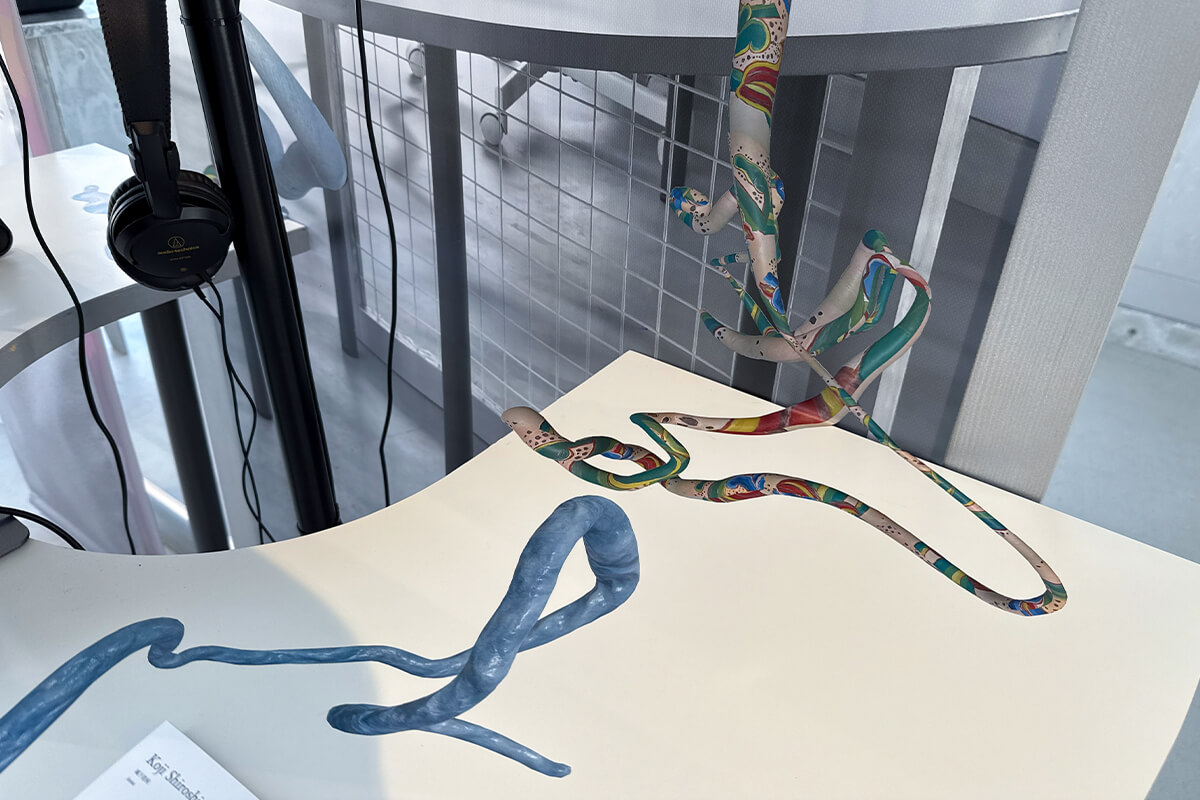
“Drawing on Space: Ōyamazaki,” created by employing the spaces of Ōyamazaki Town (Otokuni District, Kyoto Prefecture) as its support, received the Maxell Prize at the “Maxell KUSE ga aru Award: NURU.” A finalist exhibition was subsequently held.
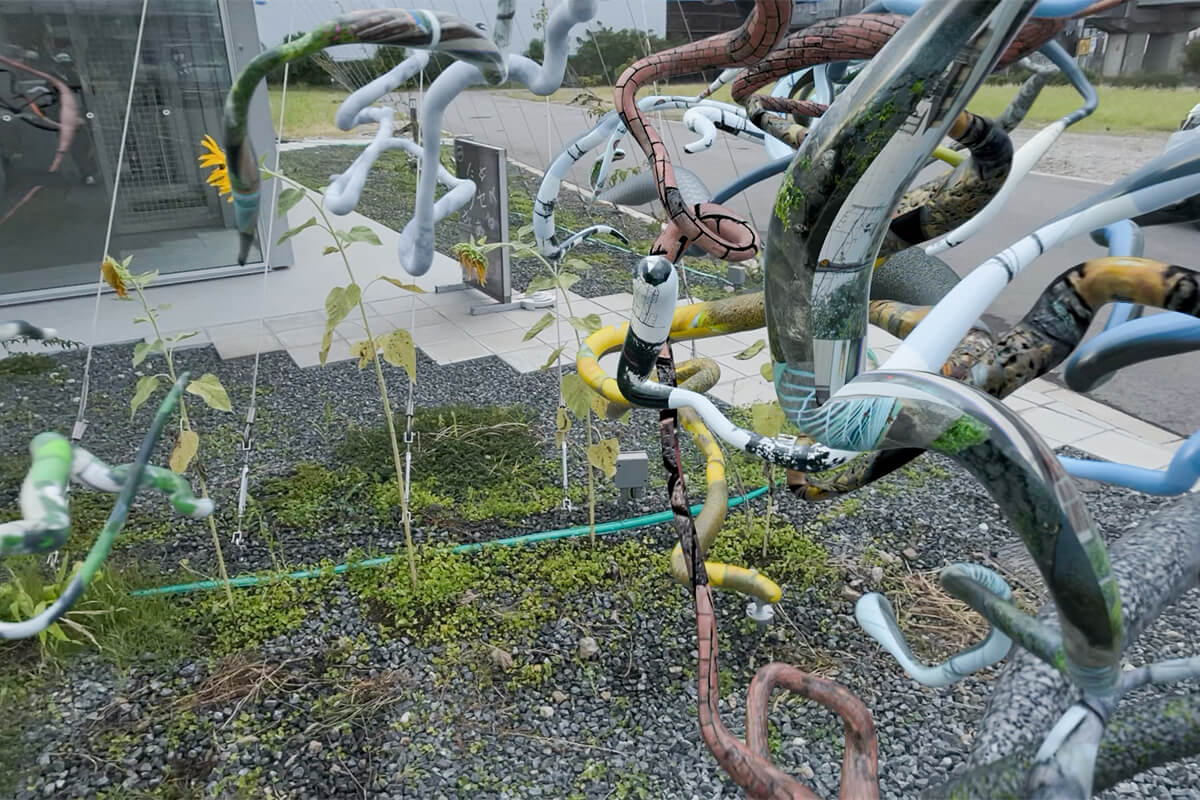
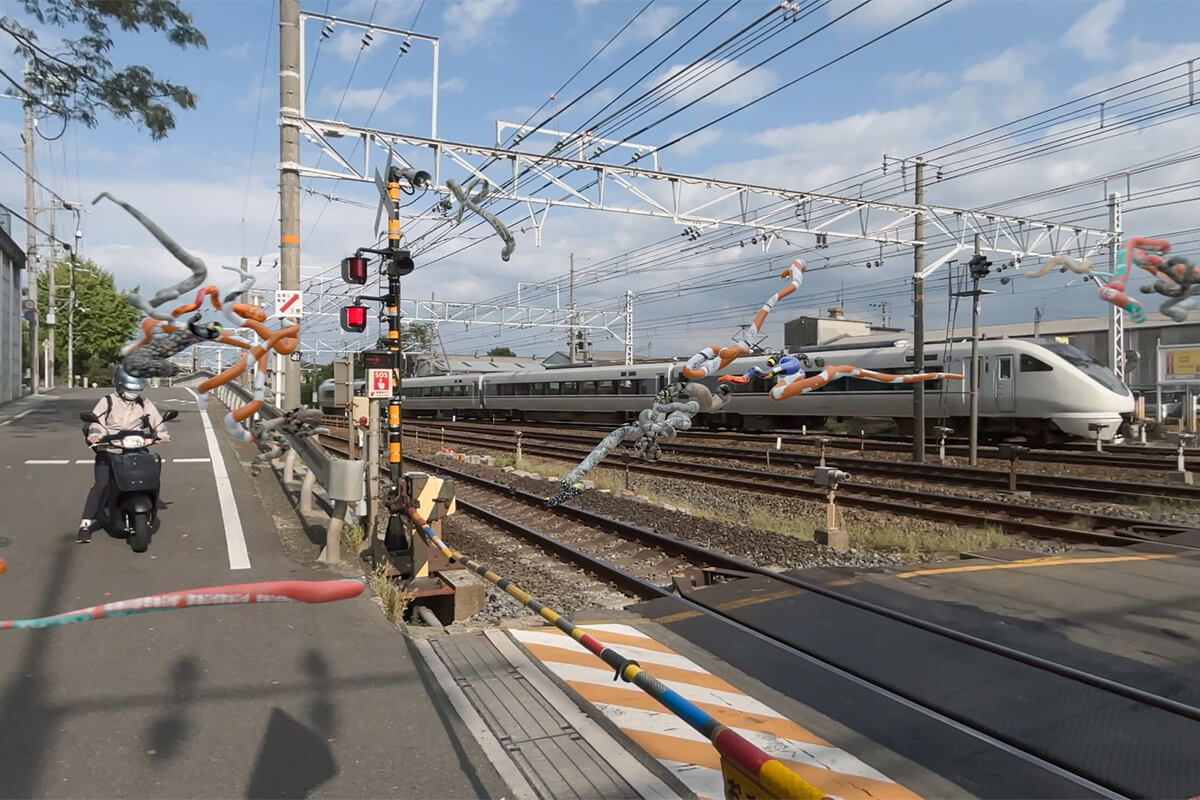
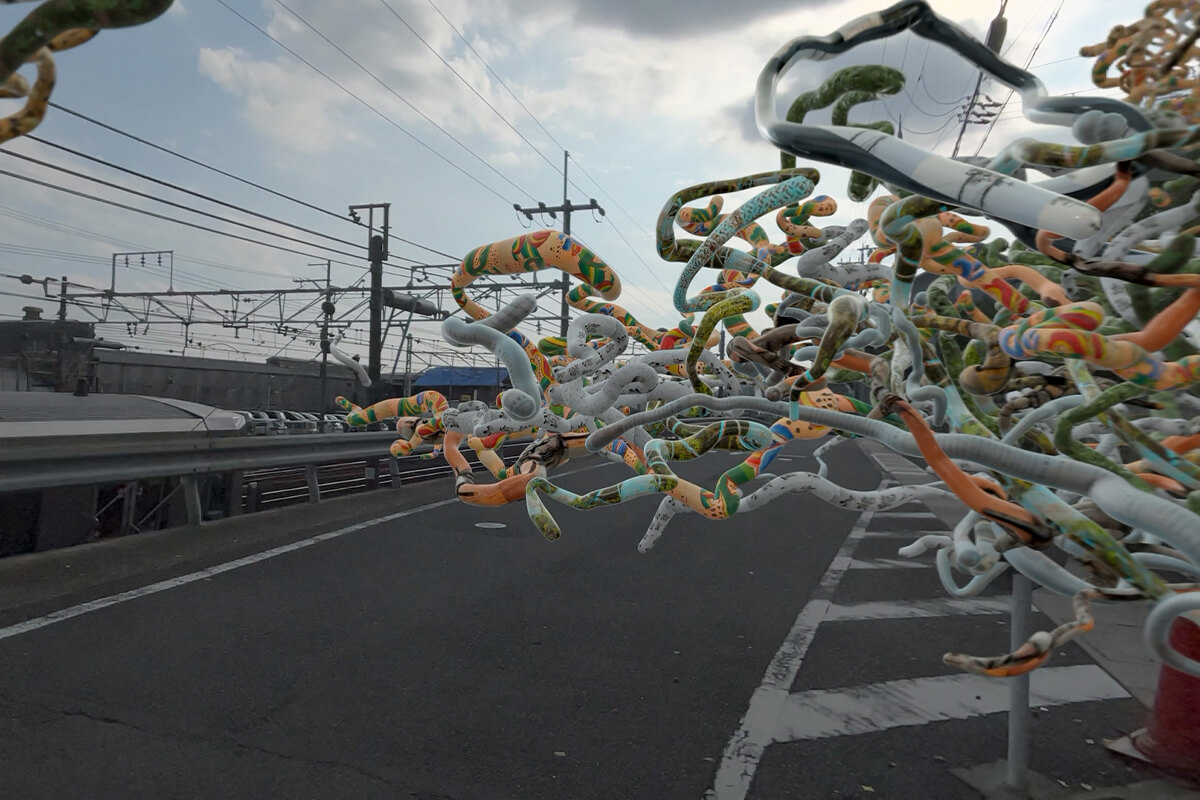
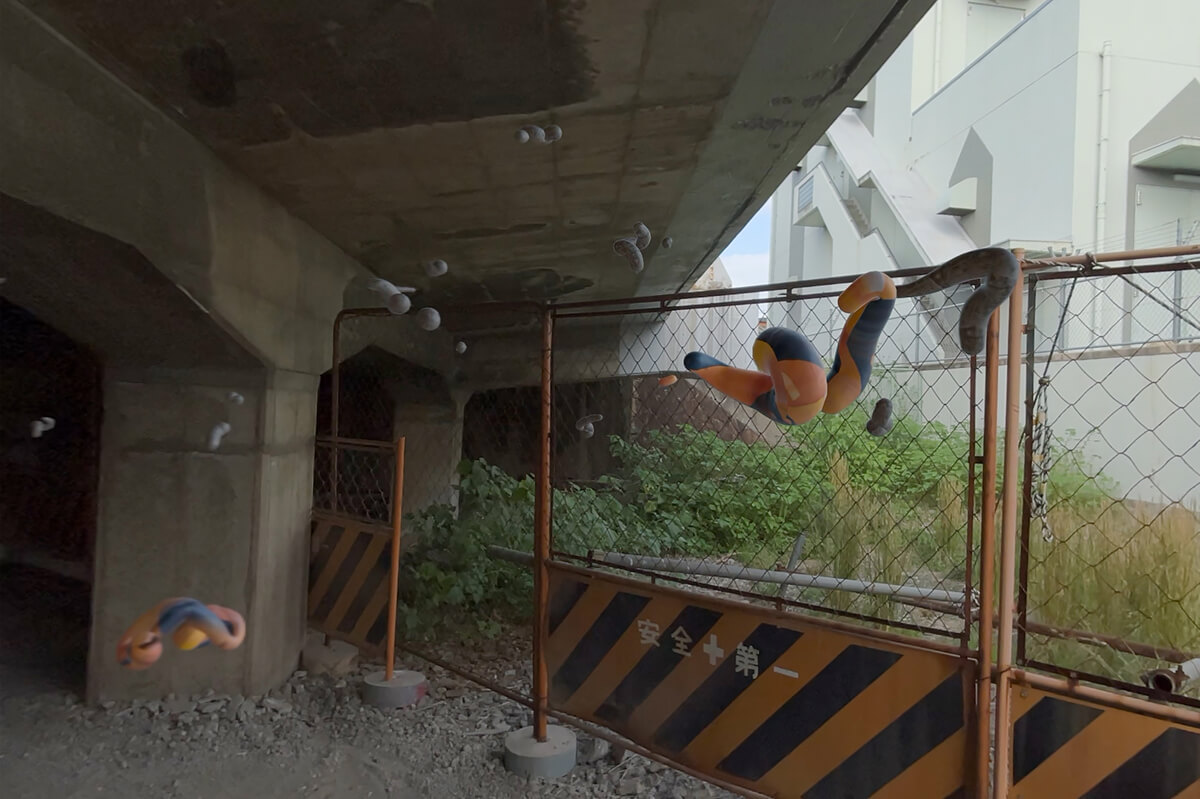
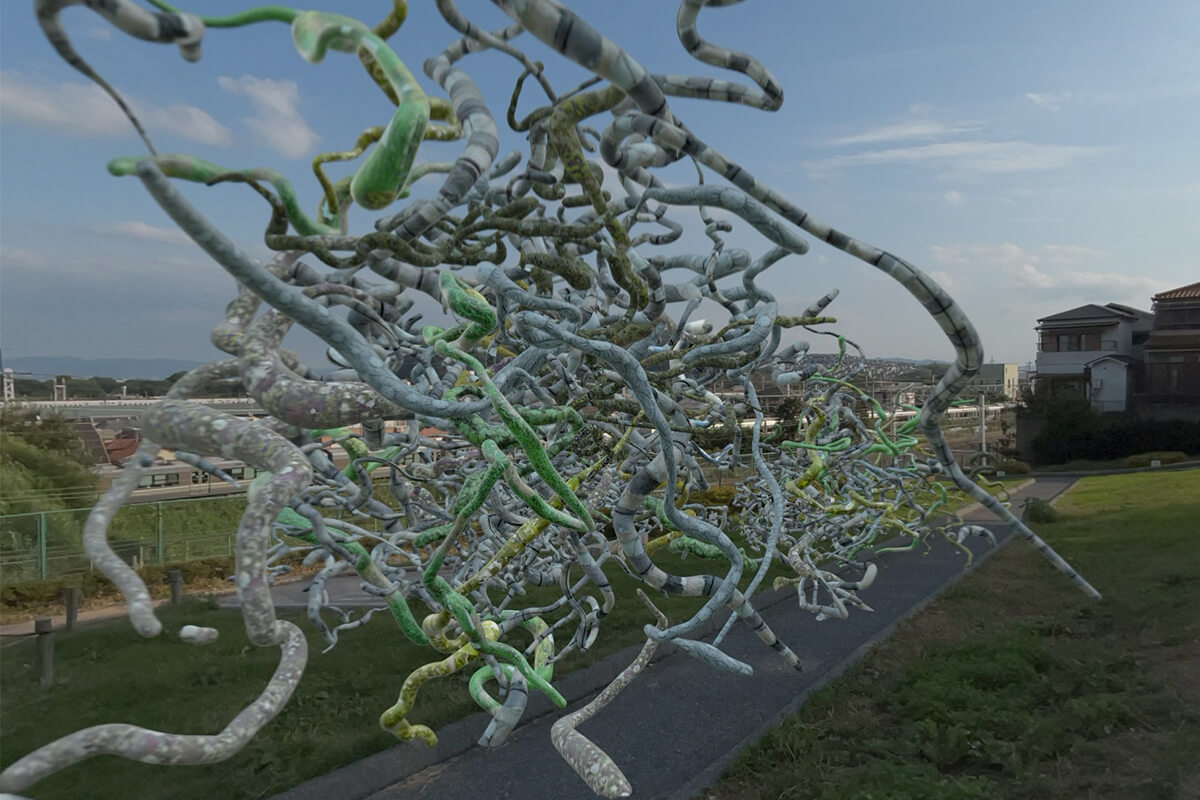
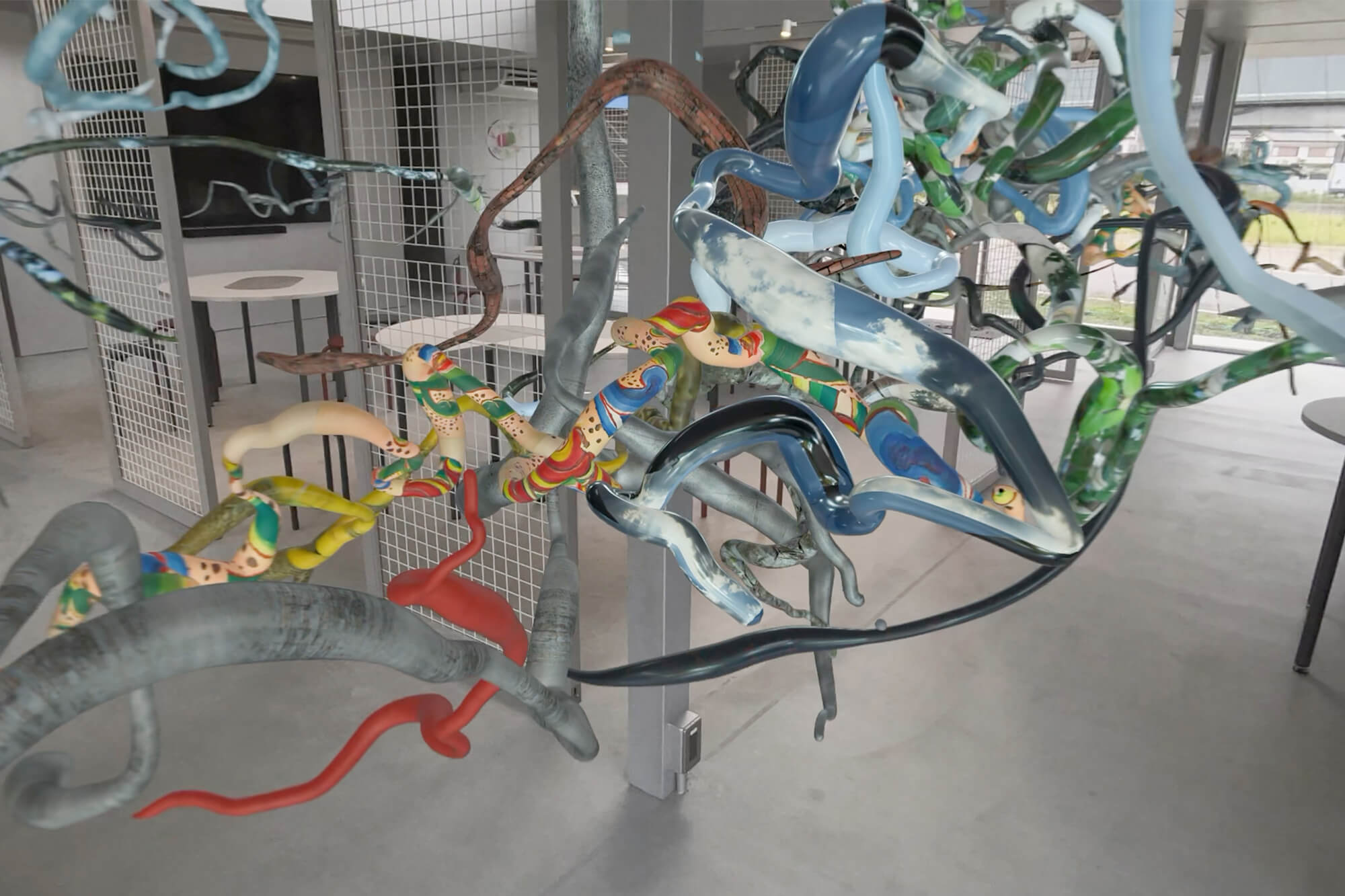
For the exhibition, we conducted field drawing and texture collection across various sites in Ōyamazaki, producing five works: Kuse ga Aru Studio, Trailhead to Mount Tennōzan, Yamazaki-in Ruins, Tile Kiln Ruins Park, and Hankyu Railway Underpass.
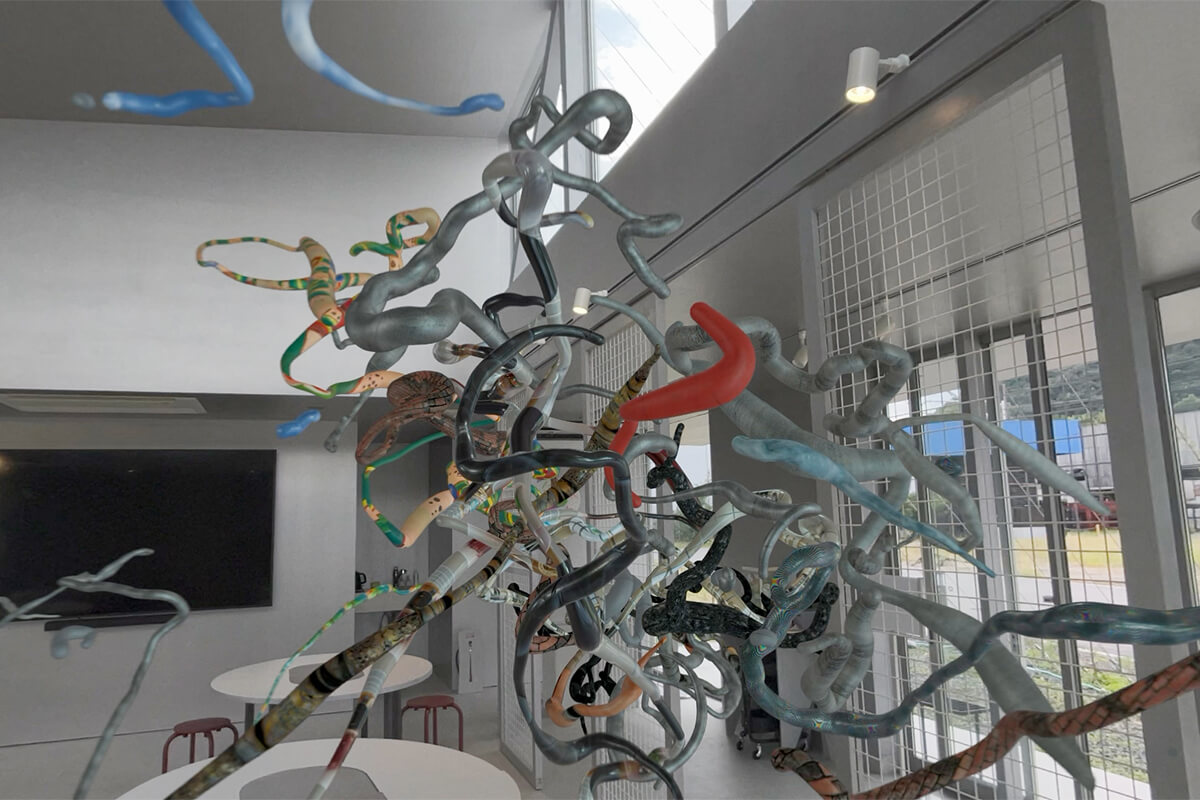
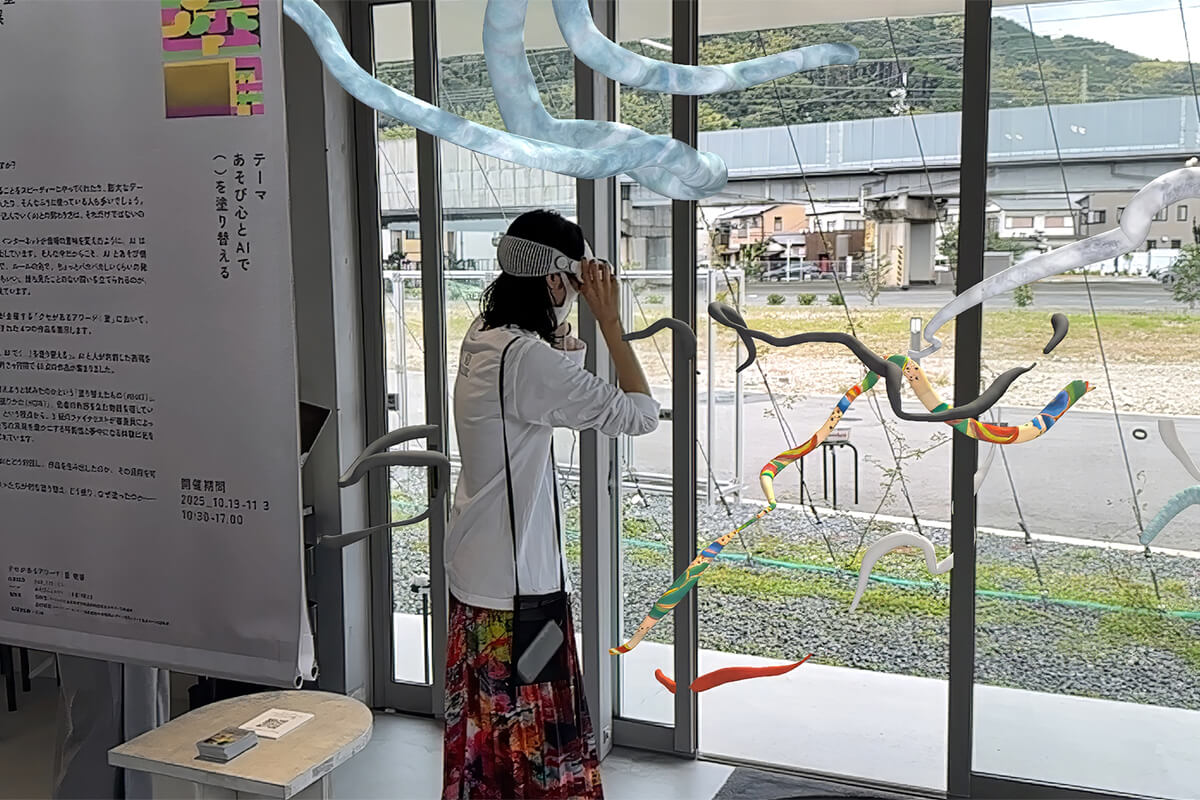
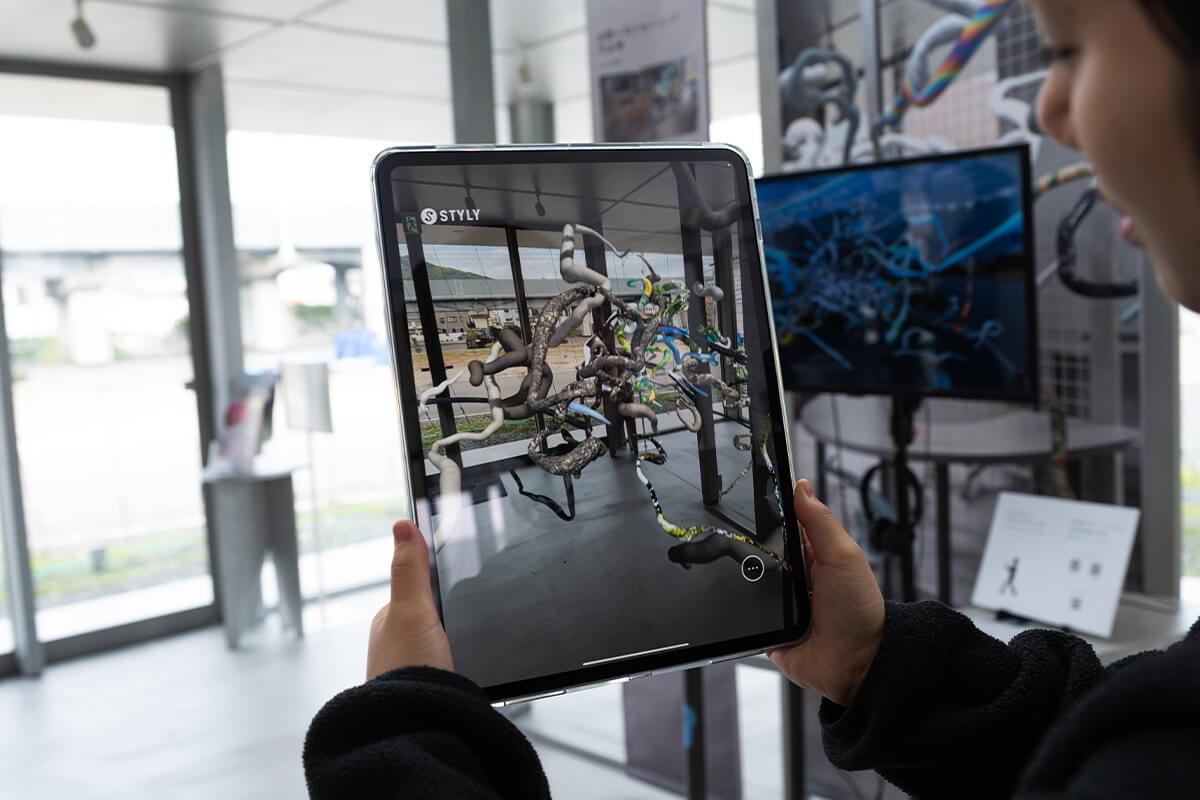
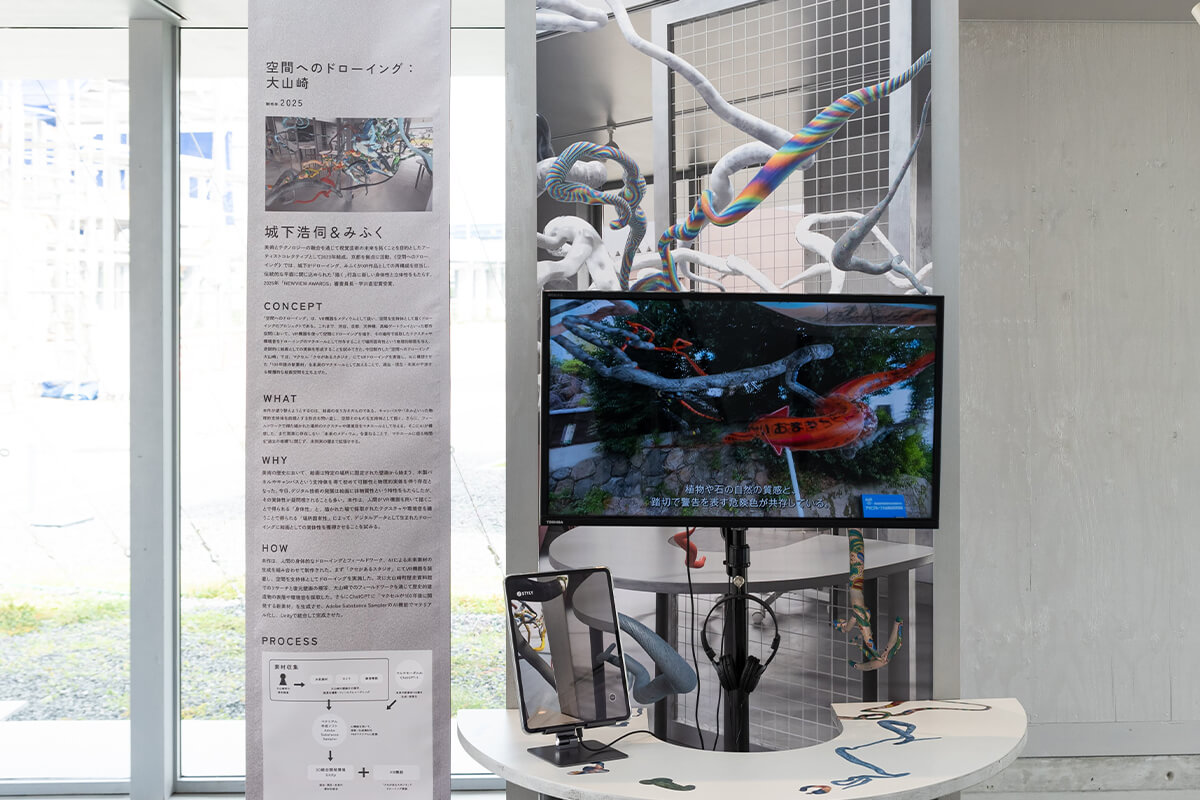
At the exhibition venue, Kuse ga Aru Studio, visitors could experience the drawings appearing in space through Apple Vision Pro, and also view the AR works using iPad devices.
Maxell KUSE ga aru Award: NURU (“Paint”) Finalist Exhibition (Official Site)
Project Description
“Drawing on Space” is a project that treats VR devices as a medium and employs space itself as the support for drawing. For this edition in Ōyamazaki, we conducted field drawing and gathered textures and environmental sounds across multiple locations to construct the work.
Ōyamazaki has long prospered as a key transportation hub, and even today the presence of the railway is felt throughout the town. At the same time, the modern railways and roads that later divided the area have left behind many everyday paths whose actual forms cannot be discerned from maps—paths that shape the town’s distinctive scenery. Wandering through its back alleys, one encounters unexpected spaces where contemporary infrastructure and older landscapes intersect.
At the Trailhead to Mount Tennōzan, known for the 1582 Battle of Yamazaki and the 1864 Kinmon Incident, we carried out field drawing at a point where the mountainside and the railway converge. Here, the natural textures of plants and stones coexist with the warning colors of the railroad crossing.
At the Yamazaki-in Ruins, founded by the monk Gyōki in the early 8th century, we turned our attention to the strong spatiality inherent in ancient wall paintings—the origin of pictorial expression. We were strongly drawn to the reconstructed images of wall-painting fragments excavated in 1999 and preserved at the Ōyamazaki History Museum, manually reproducing one and enveloping the field drawing with its matière.
Following a side path beside the Ōyamazaki History Museum, a narrow passage formed by construction fencing appears beneath the Hankyu Railway underpass, where construction notes marked with company names cover the bridge pier. They almost resemble graffiti, revealing another aspect of Ōyamazaki’s lived environment.
At the Ōyamazaki Tile Kiln Ruins, where roof tiles for building Heian-kyō were fired, Kiln No. 5—uncovered in the excavation—is recreated on the ground as a full-scale ceramic photo panel. We analyzed images of this panel with AI to recreate its matière and incorporated it as a texture in the drawing. Patterns and textures from the restored tiles used on the nearby pavilion roof were also integrated into the work.
At Kuse ga Aru Studio, the exhibition site, we constructed a multilayered pictorial space in which past, present, and future subtly interfere with one another. This was achieved by layering textures and environmental sounds collected in and around the studio together with “future media” that do not yet exist in reality. These speculative media were generated by directing AI to imagine “new materials that Maxell will develop 100 years from now,” inspired by the company’s analog core technologies.